This summer, School-to-School International partnered with the Massachusetts Institute of Technology through MIT Solve to host a 2024 LEAP Challenge Project. Through the LEAP Challenge, MIT looks for exceptional and diverse solutions to the most pressing global challenges from anyone, anywhere in the world. Together, we looked at flexible ability groupings in Tanzania (as used by the Whole Child Model).
Partnering with MIT
STS’s and MIT’s partnership began with understanding the unique challenges of implementing ability grouping in Tanzanian classrooms, characterized by exceptionally high student-teacher ratios and a very low resource setting. The ability grouping model STS’s Whole Child Model uses divides students into smaller, ability-based groups. However, several implementation challenges emerged: teachers struggled to analyze assessment data effectively and inconsistent ability grouping practices or process completion reduced the program’s measured implementation fidelity.
To address the challenges and deepen the impact of the ability grouping model, MIT and STS designed tools, resources, and strategies to improve the fidelity of implementation, provided an easier planning and resource selection experience for educators, and identified potential next steps to expand the program and enhance its ability to enable teachers to assess and support at-risk and struggling learners at scale. The results are promising!
As the final report states:
“Ability grouping, executed in the flexible ability grouping format by STS International in Tanzania, has demonstrated a valid and deliberate approach to managing student learning progress in challenging classroom contexts.
For this program to grow beyond its current scale and ultimately become a high-impact means to nurture progress in all learners—including the most struggling and at-risk learners—STS’s ability grouping program must focus first on demonstrating consistently improved implementation results such that all educators following the process are correctly completing the steps involved.
The successful increase in scale that a high fidelity of implementation to the program can catalyze, and the consequent reputation of the program amongst Tanzanian educators, will be a crucial factor in attracting broader interest in the initiative. Not only so, but enhanced program success will strengthen the program’s ability to attract the funding needed to introduce technology and devices, helping to achieve the program’s learner impact goals, particularly for teachers to unlock access to a broad suite of strategies and resources to support their most struggling learners.”
STS is proud of this partnership and excited to continue the important work of the Whole Child Model.
“Through the flexible ability grouping process, even large numbers of students can be informally assessed and then organised into differentiated groups according to their learning needs related to a given topic.”
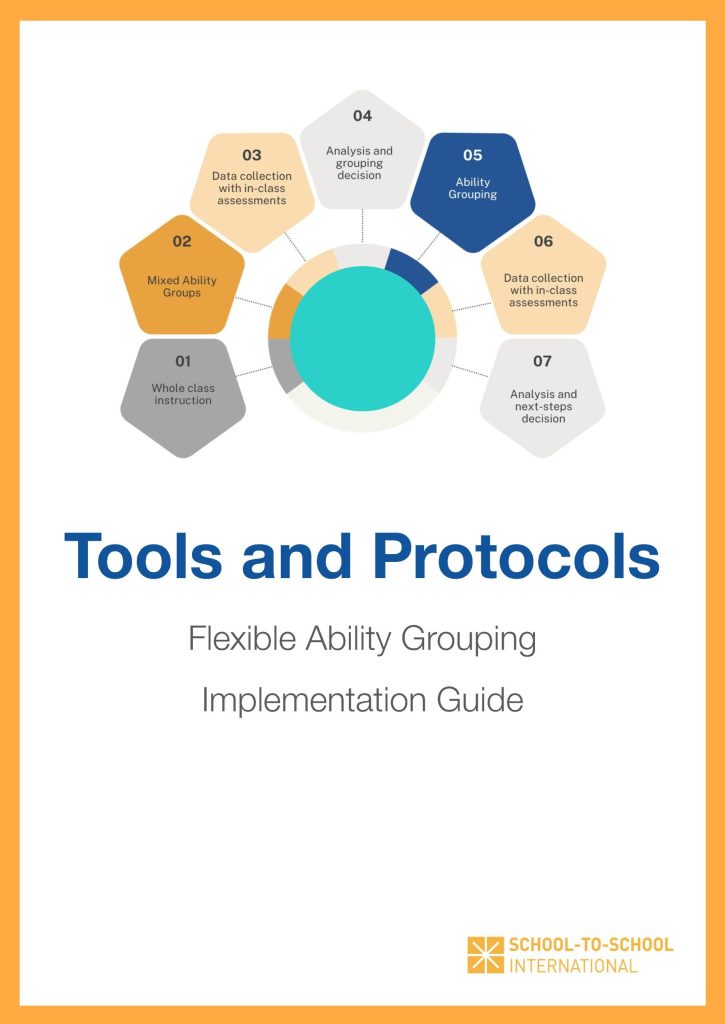
“Seven steps to begin using flexible ability groupings in large classes”
“Ability grouping as a classroom learning strategy aims to provide a context in which a relatively small number of students can interact and learn together as a group.”