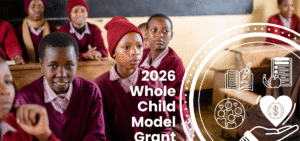
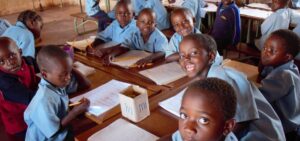
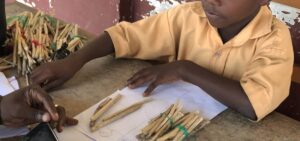
Since 2002, STS has been committed to building the conditions of success in schools worldwide so all children can learn well. One such condition is attending a health-promoting school —where students have drinkable water, facilities to practice proper sanitation and hygiene, and if possible, access to food. In Guinea, STS supported health-promoting schools by digging wells, building latrines, organizing school hygiene days, and distributing food to low-income families. In Tanzania, STS has trained girls in menstrual hygiene management and distributed locally made, reusable sanitary pads so no girl is forced to skip school while on her period.
This year, STS took another step toward promoting school health in Tanzania. Using an official research we surveyed conditions in our intervention schools. Not surprisingly, our survey revealed a range of needs, from drinkable water to handwashing facilities, improved food provisions, and health education.
This begs the question, “What is the next step?” To be sure, a health-promoting school should include all of these elements—drinkable water, toilets, and food. Yet not everything can be provided at once.
STS and our intervention schools and communities are approaching this question by considering two things. The first, of course, is cost: Each type of intervention implies a financial commitment, and some, like provision of clean water, cost significantly more than others, like health education. STS is committed to being good stewards of our resources, which come in large part from your donations, and not creating false expectations. Hence, our first step is to price each possible option, then review what we can support financially.
Figuring out what kind of support will make the biggest difference in the short term for students and teachers is another priority. This is not only a clinical question, but also one of perspective, most importantly of local school personnel and community members. However good our intentions may be, we must provide something that the community itself desires and values.
Even providing water can be problematic without community buy-in, as one story from Tanzania exemplifies. An outside NGO, with good intentions, provided a water catchment system for a school, but it was all for naught because the NGO did not effectively engage the community. Fearing the catchment system would divert water away from cattle, according to local reports, some members of the community destroyed the pipes. Could more time discussing the system’s design have averted this problem? Maybe with a guarantee of a water spigot for their cattle as well?
Similarly, local government officials have a stake in promoting health in their schools and understanding the histories of such efforts in their communities. What are their priorities? Which approaches are they prepared to support?
It’s one thing to be committed to promoting school health; it’s another to know how to proceed considering differing costs and communal priorities. That’s why STS and the Whole Child Model are proceeding first by ascertaining what is needed, then by consulting those who stand to gain and support what we propose, all before we commit to an approach that can be sustained.