
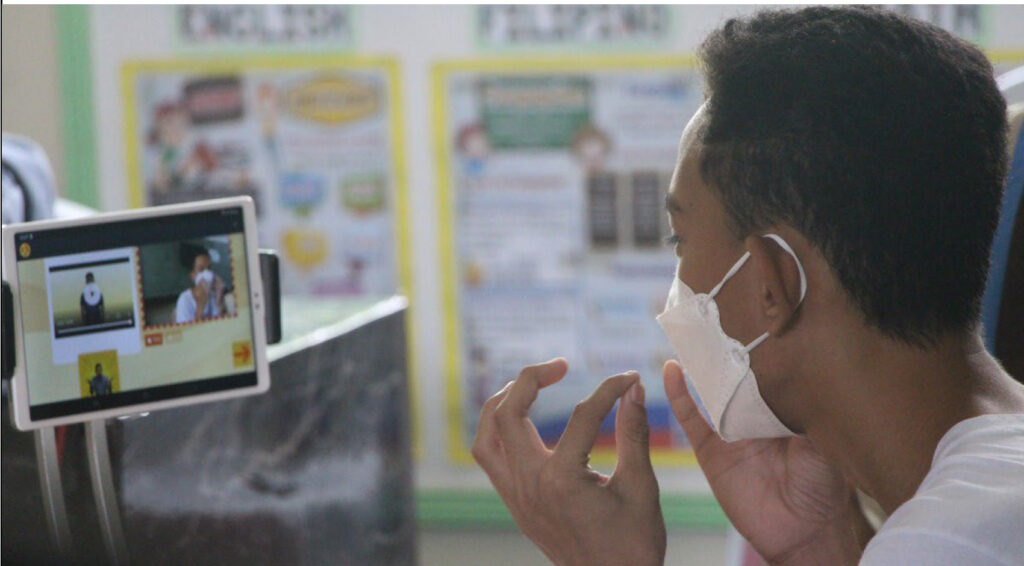
Remote EGRA for Learners who are Deaf or Hard-of-Hearing
To adapt EGRAs to fit the needs of students who are deaf or hard of hearing, USAID has supported the development of EGRAs specifically for students who are deaf or hard of hearing in Kenya, Morocco, Nepal, and the Philippines, among other countries. In the Philippines, these assessments have improved the understanding of and capability in inclusive education programming, including the development and pilot implementation of the Filipino Sign Language (FSL) curriculum and training and mentoring of teachers in FSL. While most of these EGRAs are designed to be administered in person, an interest in remotely administered EGRAs is growing.
Under funding from the USAID All Children Reading Asia (ACR-Asia) task order, and in collaboration with and under guidance provided by RTI International (RTI), STS was the principal technical assistance and implementing partner to design a “proof of concept” research activity to pilot potential ways of asynchronously conducting EGRAs for students who are deaf or hard of hearing in the Philippines. STS built on best practices and lessons learned from previous EGRAs for students who are deaf or hard of hearing and designed the study in consultation and collaboration with the USAID Gabay project implemented by Resources for the Blind, Inc. (RBI), the Philippines Department of Education (DepEd), and the USAID/Philippines Mission.
The project and resulting assessment modality found an enthusiastic reception. With enthusiasm from both students and teachers, an adaptation of this assessment into formative assessment or informal classroom or home practice could be an approach to increase technological exposure for future national testing and also provide FSL resources to a context where this support is much needed and desired.
In partnership with RTI International & USAID
Related Resources
Dates: 2021 – 2023