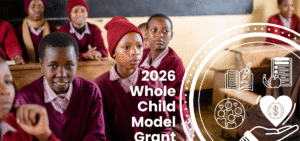
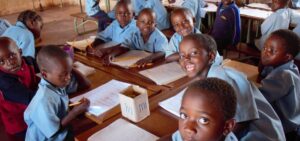
At School-to-School International, we believe that education is about more than just academics—it’s about supporting the whole child. Through our Whole Child Model (WCM), we integrate learning, child welfare, and community engagement to create lasting impact. Earlier, we reflected on the Impact of the Whole Child Model in 2024, highlighting key achievements in learning, child welfare, and community engagement. As a follow-up, we’re excited to share even more insights into how these efforts have transformed classrooms and communities—and what’s ahead in 2025 to deepen our impact.
In 2024, we at School-to-School International were proud of three things:
- Gains in learning: Teachers report that learning about improved methods for teaching reading and math has resulted in better teaching and learning. In a recent evaluation, STS found that more students were performing at their grade level in reading and math than they did at baseline.
- Children’s welfare: Girls report loving the Menstrual Hygiene Management (MHM) training and sanitary pads they received boosted their confidence and that they can “manage their menstrual health with dignity.” Girls say that their MHM clubs, which STS helped establish, allow for open discussions, breaking stigmas and empowering girls to take control of their health. And after teachers were trained in Social and Emotional Learning (SEL), they reported improved relationships with their students. Students echoed this feeling, telling us that that their classrooms now feel more welcoming and supportive, and that they are less hesitant to seek help.
- Parent involvement: Following training with parents and teachers, parents now feel more comfortable coming to school and talking about their children’s progress with their teachers. Parents also report taking a more active role helping their children with their studies at home.
Expanding the Reach of the Whole Child Model in 2025
Looking forward to in 2025:
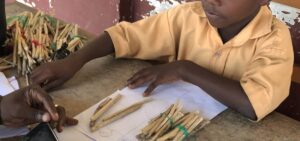
- Strengthening math instruction: With support from Research Triangle Institute and the Gates Foundation, STS is helping teachers build on their mathematical knowledge for teaching by helping their students understand their errors and use their reasoning to arrive at the answer, rather than the traditional approach of writing the problem on the blackboard and asking students to compute the “right” answer – often without knowing why.
- Greater parent-teacher collaboration: Parents have asked for more opportunities to take part in the life of the school, and teachers have asked for more opportunities to interact with parents. In 2025, we are looking forward to growing the cadres of parent-teacher teams to continue discussing ways to help their children learn better and take greater ownership over the management of the school.
- Increased government involvement: Since we started supporting Tanzanian schools in 2019, local government education officers have participated in planning, training, monitoring all our activities. On numerous occasions, they have praised the results, and asked how we can expand this support to all their schools. In 2025, we will do an “endline” of our 2-year intervention model, then with our colleagues at the district office, reflect on what worked and what didn’t, then together plan for expansion into more schools so more children can thrive.
As we look ahead to 2025, we remain committed to strengthening math instruction, parent-teacher collaboration, and government partnerships—key pillars of our Whole Child Model. By working together with educators, families, and communities, we can create sustainable change, ensuring that every child has the opportunity to learn, grow, and thrive.