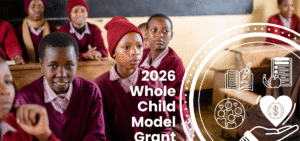
The Whole Child Model exists to help students achieve their full potential, and the best way we know how to do that is by engaging with and supporting those around them. When teachers feel more confident and parents feel more supported, they work together to help students shine. Esther Lally and Amani Nicolas, School-to-School International’s consultants in Tanzania, have seen first-hand what a difference the Whole Child Model trainings have made to the schools in the Arusha District.
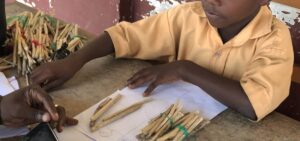
The first trainings held this year were in numeracy and literacy, and Nicolas says these trainings were very necessary. “Before the trainings,” he said, “they [the teachers] were teaching in a way that was monotonous; very talk and chalk.” Nicolas says in observing classrooms during the baseline, they saw a gap, where teachers were not addressing the individual needs of students. Specifically in mathematics, they observed teaching purely in abstracts, when research has shown students don’t usually learn best that way. This specific examination led to a teaching of the CPA methodology, which encourages teachers to use multiple methods when instructing in mathematics.
After visiting the schools post Level One Literacy and Numeracy training, Nicolas and Laly found that while some progress had been made, there were still some gaps. They moved forward with a Level Two training on the same concepts, and while it did reinforce the earlier concepts, there was still something missing. This prompted Nicolas to lead a training in classroom management, something he says is well received. “They always say this is the best training, they really love it. They say it has changed the way they perceive teaching,” remarks Nicolas. He says you can really see the difference too-you go into the classrooms and see how interactive they are; how the instruction is centered around the students.
Outside of just training with teachers, the Whole Child Model is also eager and excited to work with parents and community members, so that students feel supported on all fronts. Before November’s workshop with parents, a survey was sent out; the results of which showed that home learning and communication between teachers and parents were the main issues to focus on. The workshop came up with a few ideas, but one very well received was the parent communication tracker. Says Laly, “The parents and teachers were asking why they didn’t have this tool before!” This led to a conversation encouraging parents to check in with teachers more, both to develop relationships and to note the progress of their children, emotionally and studies-wise. The parents were emboldened to visit teachers at school, and to not wait to be contacted themselves.
The workshop clearly made a difference, because Laly said students said they noticed changes. Laly says when they went back to the schools to collect stories, students mentioned that their parents helped them with homework after school, as well as lessened their chore load so they had more time to do work. So far the trainings were only held with about 10 parents from each school, but it has been requested from School-to-School International to work with more parents.
These trainings are just the start. In 2024, the hope is to continue this work. Nicolas says the results after the Level Two training showed improvement in both categories, but moreso in literacy teaching. Therefore the goal is to do an additional numeracy training, as well as more workshops classroom management training and peer coaching. Additionally, teachers have asked for training in using local resources and behavior management; both topics Nicolas says they plan to cover in the coming year. “We already have a great foundation,” says Nicolas. “If we build on that, it will make everything more sustainable.”
Everything the Whole Child Model can do is thanks to general donations from our supporters. Please consider making a donation today!